
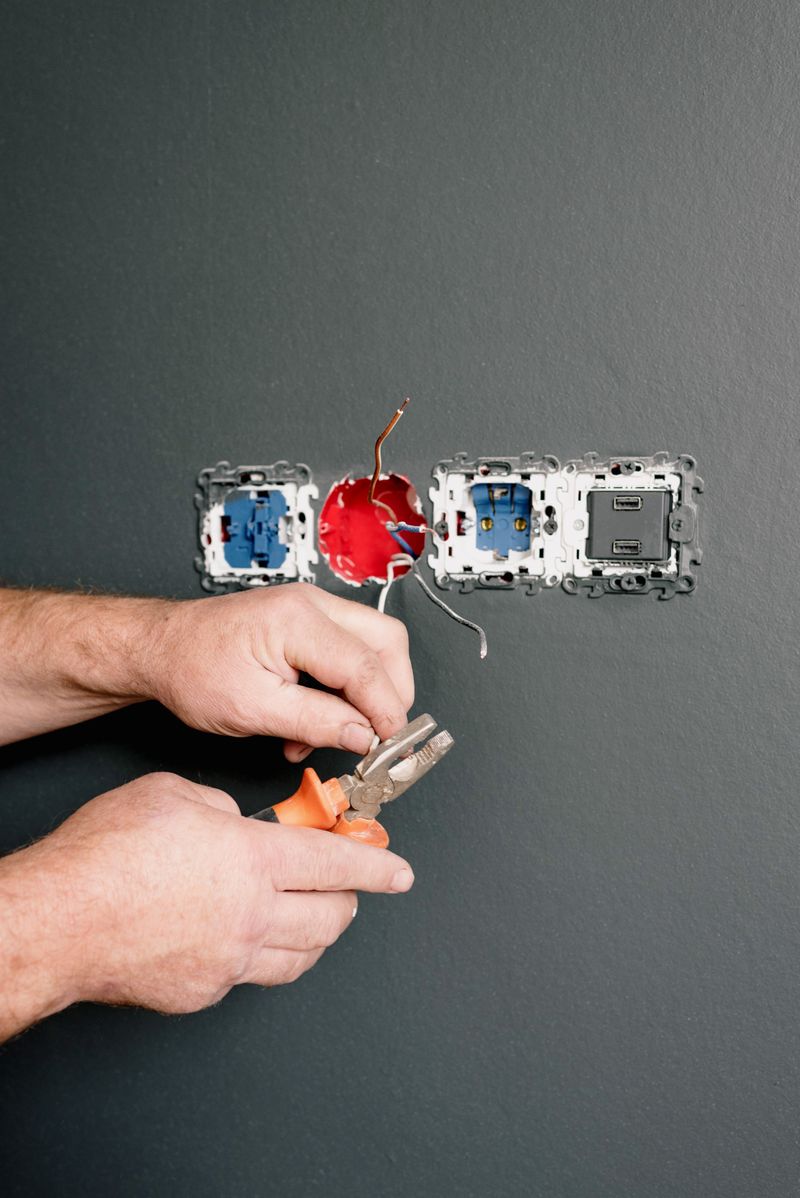
Why UAE Electrical Work Is Different From What YouTube Shows You
UAE homes run on 220-240V, the same standard used across the Middle East and Europe. A shock at this voltage is not a painful nuisance; it can stop a heart. Despite this, a significant number of Dubai, Sharjah and Ajman residents attempt electrical repairs themselves, often following guidance from videos filmed in North America, where 110V systems behave very differently and the margin for error is considerably wider. A mistake that causes a mild jolt on a 110V system can be lethal on a 220V one.
The building fabric matters too. UAE apartment wiring runs inside rigid steel or PVC conduit embedded in poured concrete, not in accessible timber-frame cavities as in many US and UK homes. You cannot simply cut into a wall to find a cable; the conduit route is often not where you would expect, and disturbing embedded live conduit in concrete without proper isolation and testing equipment is genuinely dangerous. Combine that with the region's near-constant reliance on air conditioning — meaning circuits are under sustained heavy load for most of the year — and the margin for a wiring mistake to become a fire risk is smaller than in milder climates.
Under Dubai Electricity and Water Authority (DEWA) and Sharjah Electricity, Water and Gas Authority (SEWA) regulations, all fixed electrical wiring work must be carried out by a licensed electrical contractor. Unauthorised wiring work voids your building insurance and can result in the authority disconnecting your supply until a licensed contractor certifies the fix.
Electrical Jobs You Should Never Attempt Yourself
Below are the specific jobs that account for the overwhelming majority of DIY electrical injuries and property damage claims we see across UAE homes. Each one looks simple from the outside and is genuinely hazardous in practice.
1. Replacing or Adding Wiring Inside Walls
UAE apartment wiring runs inside rigid conduit pipes embedded in concrete. To add a new socket or extend wiring, the conduit must be located, the existing cable pulled out, new cable pulled through, and correct terminations made at both ends. Working on embedded live conduit in concrete is genuinely dangerous and cannot be safely done by a non-electrician, particularly since the exact routing often deviates from the original building drawings after years of renovations by previous occupants.
2. Replacing a Consumer Unit (Distribution Board / DB Box)
The distribution board is the heart of a property electrical system — it contains the main isolator, RCDs (Residual Current Devices) and MCBs (Miniature Circuit Breakers). Replacing or modifying it requires the DEWA or SEWA supply to be isolated at the meter, which only a licensed contractor can arrange. Inside the DB, the cables coming from the meter are live even when the main switch is off. There is no safe way for a non-electrician to work inside a DB box.
3. Installing a New Circuit for an AC Unit or Water Heater
Split AC units and electric water heaters each require a dedicated circuit — a run directly from the DB box with correct wire gauge (typically 2.5mm² or 4mm² depending on load), correct breaker rating and appropriate isolation. Undersized wiring for a high-load appliance is a fire risk that may not manifest immediately but causes the cable to overheat inside the wall over months of continuous use. This kind of fault is only detectable with thermal imaging equipment once it has already started to fail.
4. Extending Socket Circuits with Open Wiring
Running an extension from a wall socket by opening the socket face, connecting additional cores and routing cable to a new socket is a very common DIY mistake in UAE homes. It overloads the existing circuit capacity and creates an unprotected connection inside the wall cavity. Multiple overloaded circuits in UAE apartments — running in concrete walls with limited heat dissipation — are a leading cause of electrical fires in residential buildings.
5. Bathroom Electrical Work of Any Kind
UAE bathrooms use the same 220V supply as the rest of the property. Bathroom zones (as defined in British Standard 7671, which UAE electrical code broadly follows) impose strict requirements on IP ratings, socket placement and circuit protection near water. The combination of water and 220V power in an enclosed space with wet floors makes bathroom electrical work among the most hazardous of all household electrical jobs. Extraction fan replacement, shaver socket installation and any lighting change inside a bathroom must be done by a licensed electrician.
6. Changing an Outdoor or Balcony Socket
Balcony sockets in UAE properties are exposed to intense UV, heat cycling and occasional rain. When they degrade they can develop internal arcing that is not visible externally. Replacing them requires correctly rated outdoor components (minimum IP44 for covered balconies, IP65 for exposed areas) and correct RCD protection. Fitting an indoor-rated socket in an outdoor location under UAE conditions typically fails within 12 to 24 months and creates a real electrocution risk in the meantime.
7. Working on Any Circuit Without Confirming It Is Isolated
Turning off a light switch does not necessarily mean a fitting or cable is dead — in older UAE apartments, switch wiring is sometimes reversed at the fitting during a previous unlicensed repair, so the switch controls the neutral rather than the live conductor and the fixture remains live even in the off position. A licensed electrician tests for this with a voltage tester before touching any conductor. Without that test, a DIY repair on what looks like an isolated circuit can deliver a full-voltage shock.
8. DIY Solar Panel or Generator Transfer Switch Wiring
A growing number of UAE villa owners are installing rooftop solar or backup generator systems. The transfer switch that connects an alternative power source to the household circuit must prevent backfeed into the DEWA or SEWA grid, which can injure utility workers on the network and is a serious safety and regulatory violation if wired incorrectly. This work always requires a licensed contractor and, in most cases, formal utility authority approval before connection.
9. Bypassing or Removing RCD and Circuit Protection
Some residents disable a tripping RCD by fitting a standard breaker in its place, reasoning that the nuisance tripping is more of a problem than whatever is causing it. This removes the single protection device most responsible for preventing fatal shocks from earth faults. An RCD that trips repeatedly is doing its job — it is signalling a genuine fault that needs diagnosis, not a device to be removed.
10. Opening and Repairing the Internal Wiring of Major Appliances
Water heater elements, oven internal wiring and built-in hob connections all carry mains voltage directly to a metal chassis in a kitchen or bathroom environment. Opening these units to replace an element or repair internal wiring without disconnecting at the isolator and testing for residual charge (some components hold a charge briefly after power-off) is a job that should go to a licensed technician, not a confident DIYer with a screwdriver.
What CAN You Do Safely?
Not everything electrical requires a professional. These jobs carry low risk when done with basic precautions:
- Change a blown light bulb (turn off the switch first, let the bulb cool)
- Replace a fuse in a plug (use the correct rating fuse)
- Reset a tripped MCB in your DB box once (if it trips again, call an electrician)
- Replace a plug on an appliance (unplug it first)
- Install a plug-in smart socket or smart switch that plugs into an existing outlet
- Clean dust from a switch plate or socket cover with the power off (surface only, do not remove the faceplate)
Signs Your Existing Wiring Needs a Professional Inspection
Many UAE properties, especially older apartment stock, carry wiring faults that developed gradually and were never caught until they became urgent. Watch for these signs and book an inspection before they progress to a genuine emergency:
- Warm or discoloured socket faceplates — a sign of internal arcing or a loose connection generating heat
- Flickering lights unrelated to the bulb — often a loose neutral connection somewhere upstream in the circuit
- A faint burning smell near an outlet or the DB box — treat this as urgent, switch off the relevant breaker and call an electrician the same day
- Sockets or switches that crackle or spark when used — stop using that outlet immediately
- An MCB or RCD that trips under normal load — indicates a fault, not a nuisance to reset repeatedly
- Visible scorch marks around a switch plate or the DB box — this means a fault has already occurred once
What Actually Goes Wrong When DIY Electrical Work Fails
The consequences of a failed DIY electrical repair in a UAE property extend well beyond the immediate shock risk. Undersized or poorly terminated wiring inside concrete walls can smoulder for weeks before a visible fault appears, by which point the damage often extends into neighbouring units in an apartment building. Insurers routinely decline claims for fire or water damage once an assessor traces the root cause to unlicensed electrical work, leaving the resident personally liable for repair costs that can run into tens of thousands of dirhams. In rental properties, a landlord discovering unlicensed alterations can hold the tenant liable for remedial certification costs, and in owned properties, unresolved wiring issues surface during resale inspections and can delay or derail a sale.
Cost of a Licensed Electrician vs the Cost of Getting It Wrong
| Job | Licensed Electrician Relative Cost | Typical Cost If DIY Goes Wrong |
|---|---|---|
| Socket or switch replacement | Lower cost | Higher cost (re-terminating a damaged circuit) |
| New AC or water heater circuit | Moderate cost | Highest cost (fire damage remediation, re-wiring) |
| DB box inspection or upgrade | Higher cost | Full unit rewire, insurance claim denial |
| Bathroom fixture or fan replacement | Lowest cost | Medical costs, potential fatality risk |
A licensed electrician callout in Dubai starts with a visit and diagnosis fee, credited toward the repair if you proceed. Message us on WhatsApp for a free, accurate quote.
Finding a Licensed Electrician in the UAE
- Confirm licensing for your specific emirate — a contractor licensed in Dubai is not automatically approved to certify work in Sharjah or Ajman
- Ask for a fixed quote before work starts — a trustworthy electrician explains the fault and the price before touching a wire
- Request a completion certificate for major work — this documents that the job was done to code and protects you at resale or during an insurance claim
- Check they carry RCD testing equipment — proper diagnosis of intermittent faults requires this, not just a visual inspection
- Avoid anyone offering to skip permits or paperwork "to save time" — this is precisely the shortcut that later voids insurance
Common Mistakes People Make Before Calling a Professional
- Repeatedly resetting a tripping breaker instead of treating it as a fault signal
- Assuming a switched-off light circuit is fully dead without testing it
- Using indoor-rated parts outdoors because they were cheaper or already on hand
- Ignoring a burning smell for "a day or two" to see if it goes away
- Copying a wiring diagram from a video without confirming UAE wire colour and conduit conventions, which differ from many source countries
- Hiring an unlicensed handyman for wiring because it is cheaper, then paying far more later for corrective certified work
Frequently Asked Questions
Final Takeaway
The line between a job you can safely handle and one that needs a licensed electrician in the UAE is not about confidence or general handiness — it is about voltage, embedded conduit, and the legal and insurance framework that governs fixed wiring here. Bulb changes, plug swaps and a single breaker reset are genuinely safe. Anything involving the DB box, a new circuit, bathroom or outdoor wiring, or work you cannot confirm is fully isolated should always go to a licensed contractor. The cost of getting it right is a fraction of the cost, and the risk, of getting it wrong.
Need a Licensed Electrician in UAE?
Safe, licensed electrical work across Dubai, Sharjah and Ajman. Fixed quotes, DEWA approved.
+971 56 452 8505 — Book an Electrician