
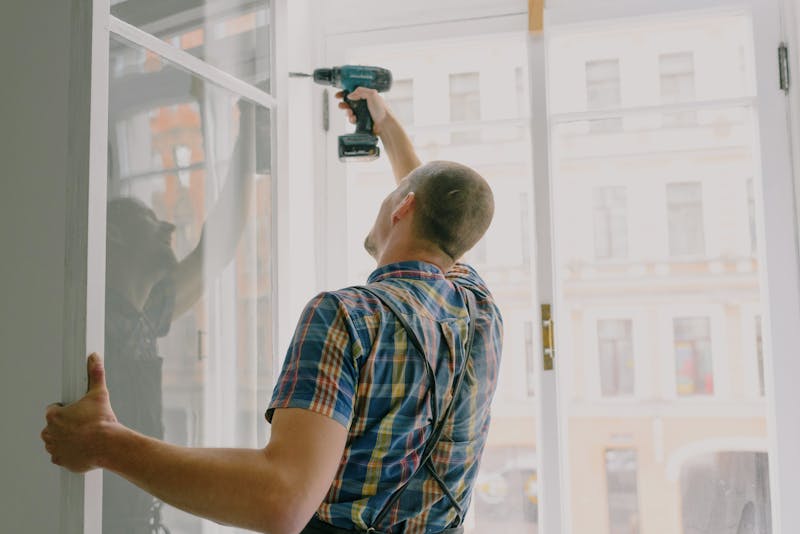
The internet makes almost every home repair look achievable. YouTube has tutorials for tiling bathrooms, re-wiring sockets and fixing leaking pipes, and some of them are genuinely useful guides for straightforward, low-risk tasks. But a number of jobs that look simple on video carry consequences, if done wrong, that are significantly worse than the cost of a professional fix. In the UAE specifically, high-rise apartments built on concrete and gypsum construction, high-pressure water systems, and intense summer heat all create hazards that do not show up in a five-minute tutorial filmed somewhere else in the world. The seven repairs below are the ones we consistently see go wrong when attempted without training, and the reasons why are worth understanding even if you never plan to hire anyone.
1. TV Mounting on Gypsum (Drywall) Walls
Mounting a TV on a gypsum wall sounds straightforward — drill holes, insert anchors, hang the bracket. But gypsum partition walls in UAE apartments are a honeycomb of metal studs and hollow cavities, not solid material behind the board. Standard plastic wall plugs are completely inadequate for a 40-65kg TV load in gypsum, since they grip nothing but a thin sheet with air behind it. The correct method requires locating the metal studs with a stud finder and either fixing directly into the stud or using properly rated toggle anchors designed to spread load across the hollow section.
A TV that pulls free from an incorrectly mounted bracket falls at full height and damages everything below it — a console table, a games system, sometimes a rug or floor tile — and can seriously injure anyone standing or sitting nearby. Professional TV mounting in Dubai is a modest, affordable job that includes cable concealment. A replacement 55-65 inch TV, by contrast, is a genuinely expensive purchase, before counting whatever else was damaged in the fall.
2. Any Drilling into Concrete Near Electrical Conduits
UAE apartment and villa walls have electrical conduits embedded directly in the concrete, and there is often no accurate as-built drawing showing exactly where each run goes, especially in older buildings that have had fixtures added or moved over the years. Drilling into a live conduit can cause electrocution, a fire inside the wall void that is difficult to detect until it has spread, or a short circuit that damages appliances across the whole circuit. A professional uses a cable detector to scan the wall before drilling into any concrete surface, and knows the typical routing patterns — conduits usually run vertically from switches and horizontally at socket height — well enough to work around them safely even when no detector is available. The risk of guessing is never proportionate to whatever time or cost it might save.
3. Replacing a Shower or Tap Mixer Valve
Mixer valves for showers and taps look like a simple swap — turn off the water, unscrew the old one, fit the new one. In practice, fittings that have sat in UAE hard water conditions for several years are frequently corroded at the thread, and applying force to break a stuck fitting often shears it rather than loosening it cleanly, turning a valve swap into an unplanned pipe repair behind the wall. Overtightening a replacement fitting is just as common a mistake in the other direction — it cracks the ceramic cartridge inside modern mixers, which either leaks immediately or fails within weeks under normal use. Getting the thread engagement right on UAE-spec copper and brass fittings, and knowing how much torque a particular fitting can take before it cracks, comes from doing the job repeatedly, not from a single online tutorial.
4. Ceiling Fan Installation and Wiring
A ceiling fan needs a correct electrical connection at the ceiling rose, but the more critical part of the job is mechanical fixation into the ceiling structure itself. In UAE apartments the visible ceiling is very often a suspended false ceiling sitting below the actual structural concrete slab, with an air gap in between for ductwork and wiring. Mounting a 15-25kg ceiling fan into the correct structural fixing point — not just the gypsum board of the false ceiling — requires knowing exactly where the structural anchor points are, usually pre-installed by the original electrical contractor for this purpose. A fan that comes loose and falls from a typical UAE ceiling height, while running, causes serious injury and is one of the more dangerous DIY mistakes on this list precisely because the risk is not obvious until installation is already finished.
5. Tile Grouting and Replacement
Removing a single cracked tile without cracking the tiles around it is considerably harder than it looks in a video. The grout lines have to be cut cleanly along the edge without the blade slipping into an adjacent tile, and the old tile then has to be lifted without damaging the waterproofing membrane underneath — a real risk in bathrooms and wet areas, where a punctured membrane can cause a slow leak into the floor below that is not discovered for months. Matching a replacement tile and grout colour in an existing UAE bathroom adds a second challenge, since tile batches vary slightly between production runs and grout colour shifts as it cures and ages under normal use. A professional gets the repair to blend in convincingly; an amateur replacement tile very often stands out permanently, and a damaged membrane can turn a cosmetic repair into a much larger one.
6. Curtain Track and Blind Installation at Height
Installing curtain tracks or roller blinds in UAE apartments with high ceilings, often 3 metres or more, requires working safely at height for an extended period, not just a quick reach. A significant share of DIY-related home injuries come from falls off chairs, stools or incorrectly positioned ladders, and a curtain track installation can easily involve 30-60 minutes of repeated up-and-down movement rather than a single quick task. A professional brings the right ladder or platform for the ceiling height and knows how to position it safely on tile or marble flooring, which is more slippery under a ladder base than it looks. The job itself is a quick, low-cost visit. A fall from two metres while holding a power drill is, at minimum, a hospital visit, and in the worst cases considerably more serious.
7. Any Repair Involving Gas Lines
Gas line repairs, new connections and appliance connections in UAE properties must be carried out by a licensed contractor, whether the property uses piped gas or bottled LPG cylinders. This is both a legal requirement under UAE civil defence and utility regulations, and a genuine life-safety matter — gas leaks are one of the few home repair categories where a mistake can be fatal, not just costly. If you ever smell gas in your UAE property, do not attempt any repair yourself under any circumstance: leave the property immediately, do not switch any electrical switch on or off on your way out since a spark can ignite accumulated gas, and call the gas authority or civil defence along with an emergency contractor once you are safely outside.
The Real Cost of Getting It Wrong
Looking at these seven jobs together, the pattern is consistent: the professional repair itself is rarely expensive, but the failure mode when something goes wrong almost always costs several times more than the job would have cost done properly the first time. A modestly priced TV mounting job protects a TV worth thousands. A cable-detector check before drilling, essentially free as part of a proper callout, protects against a repair bill and a potential fire. A correctly torqued mixer valve avoids a wall being opened up to replace a section of pipe. None of this means every home task needs a professional — it means the short list above is worth treating differently from the long list of jobs that are genuinely safe to do yourself.
What Can You Do Yourself?
Plenty of home tasks are genuinely safe for a careful person to handle without any special training: changing light bulbs and fuses, cleaning AC filters, tightening loose furniture screws, touching up paint on small scuffs, sealing gaps around windows with silicone, assembling flat-pack furniture with clear instructions, replacing a shower head, and hanging lightweight picture frames with the correct rated hooks for the wall type.
The distinction that matters is this: if the repair involves structural loads overhead, water under mains pressure, electrical wiring behind a wall, or working at height for an extended period, get a professional. Almost every DIY repair that goes seriously wrong in a UAE home falls into one of those four categories, and almost every safe DIY job does not.
How to Find a Reliable Handyman in the UAE
Once you have decided a job needs a professional, the difference between a good outcome and a repeat callout usually comes down to a few simple checks. Ask whether the handyman brings a hammer drill and proper masonry anchors as standard — UAE walls are concrete or hollow block, not the timber-frame drywall common in many other countries, and standard fixings simply do not hold here. Ask for a fixed price before work starts rather than an hourly estimate that can grow once the job is underway. For anything involving drilling near wiring, ask whether a cable detector is used as routine practice, not just when something looks obviously risky. And for jobs that could plausibly cause water or structural damage if done wrong, ask whether the work carries any workmanship guarantee — a handyman confident in their own work will offer one without hesitation.
Need a Reliable Handyman in UAE?
TV mounting, furniture assembly, door repairs and more — professional service across Dubai, Sharjah and Ajman.
+971 56 452 8505 — Book a Handyman